Amulets and Talismans: Why Humans Have Carried Meaningful Objects for Thousands of Years
Long before passports and packing cubes, travelers carried small objects they believed offered protection, guidance, courage, or luck.
Before passports, guidebooks, and GPS, travelers often tucked a small object into a pocket, stitched it into their clothing, or wore it around their neck. Some believed these objects offered protection from danger. Others saw them as symbols of faith, reminders of home, or companions on uncertain journeys.
These objects, known as amulets and talismans, appear throughout history and across cultures. Archaeologists have uncovered them in ancient Egyptian tombs, Roman settlements, medieval pilgrim sites, Indigenous communities, and countless other places around the world. They were crafted from stone, shell, metal, wood, glass, bone, and precious gems, each carrying layers of meaning shaped by the people who made and carried them.
While the words amulet and talisman are often used interchangeably today, they traditionally describe slightly different kinds of symbolic objects. More importantly, they reveal something timeless about the human experience.
Across cultures and centuries, people have searched for ways to find courage in uncertainty, protection during travel, comfort in grief, hope during times of change, and connection to something greater than themselves. Whether viewed through a religious, cultural, psychological, or symbolic lens, amulets and talismans remind us that humans have always assigned meaning to the objects they carry.
In this guide, we’ll explore the history, symbolism, and archaeology of amulets and talismans from around the world, along with why these meaningful objects continue to resonate with travelers today.
🔹 This post may contain affiliate links, including Amazon. As an Amazon Associate, I earn from qualifying purchases. I only share what I genuinely recommend. Thank you for your support!
What Are Amulets & Talismans?
Although the terms are frequently used interchangeably, there is a traditional distinction between the two.
An amulet is generally carried or worn for protection. Throughout history, many cultures believed amulets could help guard against illness, danger, misfortune, or harmful spiritual influences. Others carried them as expressions of faith, cultural identity, or personal remembrance.
A talisman, on the other hand, is often associated with inviting or cultivating a particular quality or intention, such as courage, wisdom, healing, abundance, or good fortune. Historically, however, the distinction wasn’t always clear, and many objects served both protective and aspirational purposes.
Amulets vs. Talismans:
| Amulet | Talisman |
|---|---|
| Traditionally associated with protection | Traditionally associated with intention or attracting desired qualities |
| Often worn or carried to ward off harm | Often worn or carried as a symbol of a goal or aspiration |
| Defensive in purpose | Purposeful or aspirational in focus |
| Historically linked with protection, faith, or remembrance | Historically linked with courage, wisdom, prosperity, healing, and other intentions |

Examples of Amulets & Talismans:
| Common Amulets | Common Talismans |
|---|
| Scarab | Engraved gemstone |
| Eye of Horus | Prosperity charm |
| Hamsa | Intention pendant |
| St. Christopher medal | Courage token |
| Pilgrim shell | Good fortune charm |
Why Have Humans Carried Protective Objects for Thousands of Years?
From the earliest archaeological discoveries to modern-day keepsakes, humans have long assigned meaning to the objects they carry. While the symbols, materials, and beliefs have varied across cultures, the motivations behind them are remarkably familiar.
Life has always been uncertain.
People set out on dangerous journeys, faced illness without modern medicine, went to war, experienced childbirth, mourned loved ones, and navigated major transitions throughout life. In moments when the future felt unknown, carrying a meaningful object often offered a sense of comfort, hope, identity, or connection.
For some, these objects represented divine protection or spiritual guidance. For others, they symbolized family, community, ancestors, or deeply held beliefs. Whether worn around the neck, tucked into a pocket, sewn into clothing, or placed within a home or burial, these objects became tangible reminders of what people valued most.
Archaeological discoveries show that this practice spans thousands of years and countless civilizations. Amulets and talismans have been uncovered in ancient tombs, homes, temples, and settlements across the world, revealing not only artistic traditions but also the hopes, fears, and everyday lives of the people who carried them.

Even today, many of us continue this tradition in our own way. A wedding ring, a military dog tag, a necklace passed down through generations, a shell collected on a meaningful trip, or a tattoo marking an important chapter in life can all serve as reminders of identity, resilience, love, or purpose.
Whether viewed through a religious, cultural, psychological, or symbolic lens, meaningful objects remind us of something deeply human: when life feels uncertain, we often seek something tangible to carry with us as we move forward.
Ancient Amulets & Talismans Around the World
Although the desire for protection, courage, and connection appears across cultures, the objects people created reflected their own religions, environments, artistic traditions, and understandings of the world. From ancient Egyptian scarabs to Japanese omamori and Christian pilgrim medals, amulets and talismans took countless forms while serving many of the same deeply human needs.
🌀🌊🦋☀️Curious what your travel symbol might be?
Take the Travel Archetype Quiz to discover which symbol reflects your journey.
Each archetype represents a different phase of transformation—like grounding, flow, release, or rebirth—and helps guide your next steps.
When you complete the quiz, you’ll get a free guide tailored to your symbol, including journal prompts, travel ideas, and more.
Ancient Egyptian Amulets
Before I chose the scarab as one of the guiding symbols of The Mindful Wellness Traveler, I first encountered it through archaeology.
During my archaeology studies in Israel, I was fascinated by how often Egyptian objects appeared far beyond Egypt itself. Scarabs and other artifacts turned up in excavations and museums across the region, carrying traces of an ancient world connected through trade, diplomacy, migration, military power, travel, and cultural exchange.
One discovery that has stayed with me came during an excavation I participated in at Tel Gezer, where I also helped document the dig through photography and video. One of my friends uncovered a remarkable 3,600-year-old Canaanite foundation deposit beneath what may have become a palace or temple. Among the carefully placed offerings were gold and silver jewelry, a bronze figurine, and an Egyptian scarab.

A tiny object like that scarab can hold an enormous story. It may have traveled through commerce, political relationships, the movement of people, or the spread of Egyptian influence before being placed in a ritual deposit at a Canaanite site. Finds like these reveal that the ancient world was never as neatly divided as modern maps can make it seem. Objects, beliefs, symbols, and artistic traditions crossed borders and were reinterpreted in new cultural settings.
Later, when I traveled through Egypt, I encountered many of these symbols again in temples, tombs, museums, and monumental art. Seeing them in Egypt after studying their movement through the Levant gave them another layer of meaning. They were not simply decorative motifs or isolated artifacts. They formed part of a visual and religious language that traveled across landscapes and endured for thousands of years.

That history is one reason the scarab eventually became so meaningful within my own work. In The Mindful Wellness Traveler, it represents light, rebirth, resilience, and the steady return of the sun after darkness. Its meaning has changed as it has traveled through time, but its association with renewal still resonates.
Some of the best-known ancient Egyptian amulets include:
🪲 Scarab
Perhaps the most recognizable Egyptian amulet, the scarab symbolized rebirth, transformation, and the daily renewal of the sun. Egyptians associated the scarab beetle with Khepri, a form of the rising sun, and imagined the sun being carried across the sky much as the beetle rolled its ball across the earth.

Scarabs were worn during life, used as seals, exchanged as meaningful objects, and placed in tombs. Their widespread discovery both within and beyond Egypt reflects not only their religious importance but also the movement of Egyptian symbols through trade, diplomacy, political influence, and cultural exchange.
For me, the scarab has come to represent a quieter kind of transformation. Not destruction for its own sake, but the steady work of returning from darkness with greater clarity, stronger boundaries, and something worth carrying forward.
👁️ Eye of Horus (Wedjat)
The Eye of Horus (Wedjat) represented protection, healing, and wholeness. According to Egyptian mythology, Horus lost his eye during his struggle with Seth before it was restored, making it a powerful symbol of recovery after injury and the triumph of order over chaos.

Over time, the Eye appeared on jewelry, amulets, coffins, boats, temples, and other objects throughout Egypt, reflecting its importance in both daily life and religious practice.
Modern researchers continue to explore the symbol’s cultural significance, with some even proposing intriguing connections between its artistic form and ancient understandings of anatomy, although these interpretations remain speculative.
𓊽 Djed Pillar
Often described as the backbone of Osiris, the djed pillar symbolized stability, endurance, continuity, and restored order. It was closely associated with Osiris and with ideas of resurrection and permanence.

Djed amulets were especially important in funerary settings, where they could symbolize the hope that the deceased would remain strong and whole in the afterlife. The symbol also appeared in temple rituals and religious imagery, linking personal protection with the broader maintenance of cosmic order.
☥ Ankh
The ankh represented life and, in many contexts, eternal life. Egyptian gods are frequently shown holding ankhs or extending them toward pharaohs, sometimes near the nose to suggest the breath of life.

Although the ankh appears in jewelry and small objects, it functioned more broadly as a sacred sign of life, divine favor, and vitality rather than only as a personal protective amulet. Its enduring popularity today shows how some symbols continue to gather new meanings long after the culture that created them has changed.
🎀 Tyet Knot (Knot of Isis)
The tyet knot was closely associated with the goddess Isis and symbolized protection, divine care, and regenerative power. It is sometimes called the Knot of Isis because of its connection with the goddess and her role as protector, healer, and restorer.

Often made from red stone, glass, or other red-colored materials, tyet amulets were placed within mummy wrappings and funerary assemblages. They were intended to surround the deceased with the protection of Isis during the journey into the afterlife.
❤️ Heart Scarab
Heart scarabs were larger funerary amulets created specifically for burial. They were usually placed over the heart or among the mummy wrappings and often carried inscriptions adapted from the Book of the Dead.

During the judgment of the dead, the heart was believed to be weighed against the feather of Ma’at, representing truth and cosmic order. The inscription on a heart scarab asked the heart not to testify against its owner. In this way, the amulet served not only as protection but as an attempt to guide the deceased safely through one of the most consequential moments of the afterlife.
🌍 Where You Can See These Symbols Today
During my travels through Egypt, I encountered these symbols everywhere, from the towering temples of Karnak, Luxor, Philae, and Edfu to the richly decorated tombs in the Valley of the Kings. Museums like the Egyptian Museum in Cairo and the Grand Egyptian Museum bring these traditions even closer, displaying everything from tiny scarab amulets to elaborate funerary objects that reveal how deeply symbolism was woven into ancient Egyptian life.
🌿 Make this more than a trip — make it a turning point.
Grab the Deeper Travel Planner to map out a soulful solo getaway built around rest, reflection, and renewal.
Greek and Roman Protective Charms
When I traveled solo through Greece, I spent two nights aboard ferries and also took a boat tour across the Aegean. Standing on deck with the islands scattered across the water, it was easy to understand why ancient travelers and sailors looked for protection wherever they could find it.
Before engines, weather forecasts, and GPS, a sea journey depended on skill, favorable winds, the stars, and forces far beyond a traveler’s control. Merchants, soldiers, pilgrims, and sailors crossed the Mediterranean carrying objects and symbols associated with safe passage, divine favor, courage, and good fortune.
In the Greek and Roman worlds, protective imagery appeared almost everywhere. It could be worn as jewelry, carved into gemstones, placed in homes, painted on ships, stamped onto coins, or built into public spaces. These symbols were not separate from ordinary life. They traveled with people, guarded thresholds, marked boundaries, and connected everyday experience with mythology and religion.
Some of the best-known protective symbols include:
🐍 Gorgoneion (Medusa)
The Gorgoneion, an image of the Gorgon’s head, was one of the ancient Mediterranean’s most powerful protective symbols. Although Medusa is usually remembered today as a monster with snakes for hair, her terrifying face was also used to frighten away danger.
The image appeared on shields, armor, temples, doorways, coins, mosaics, jewelry, and household objects. Athena herself was often shown wearing the Gorgoneion on her breastplate or shield.
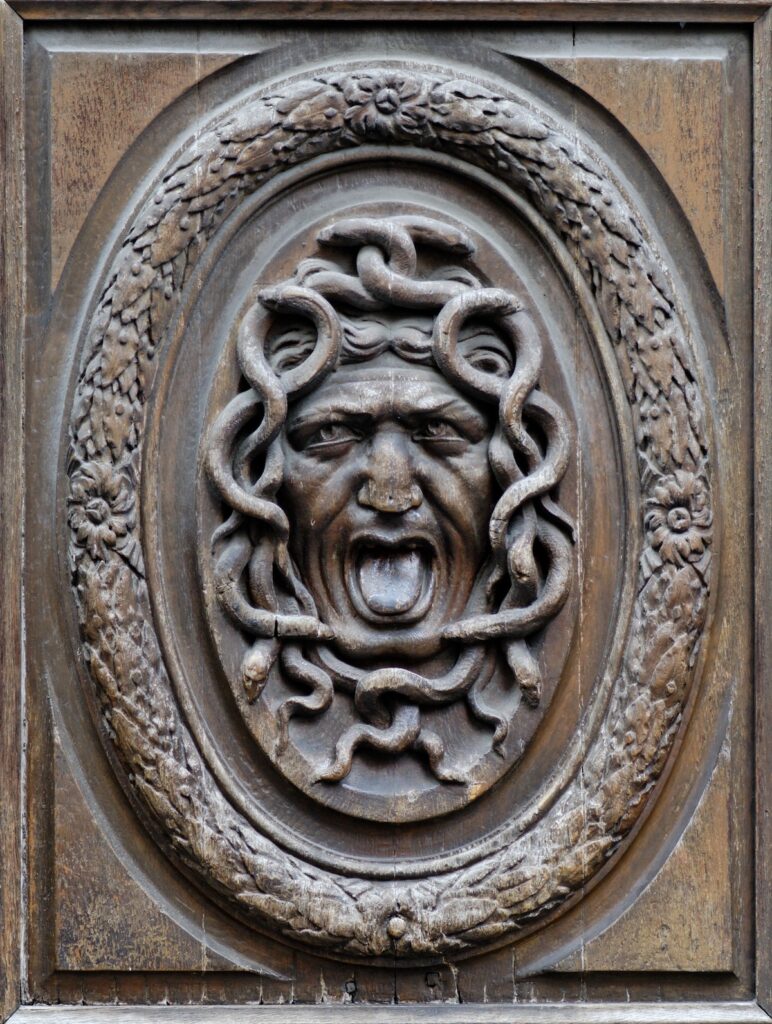
This is known as an apotropaic symbol, meaning an image intended to turn away evil, danger, or misfortune. There is something wonderfully paradoxical about Medusa becoming a guardian: the face that inspired fear was transformed into the very thing that protected its wearer.
🧿 The Evil Eye
Belief in the evil eye was widespread across the Greek and Roman worlds. Envy, admiration, or a hostile gaze could be understood as carrying harmful force, so people used protective objects, symbols, gestures, and inscriptions to deflect it.

The familiar blue eye charm seen throughout Greece today is one modern expression of a much older Mediterranean tradition. Ancient versions did not always resemble the modern glass eye, but the underlying idea was similar: a watchful symbol could turn a dangerous gaze back on itself.
The tradition has endured because it speaks to something people still recognize. Attention does not always feel harmless. Whether understood spiritually, psychologically, or culturally, the evil eye gives form to the fear of being seen with envy or ill intent.
👣 Hermes and the Traveler
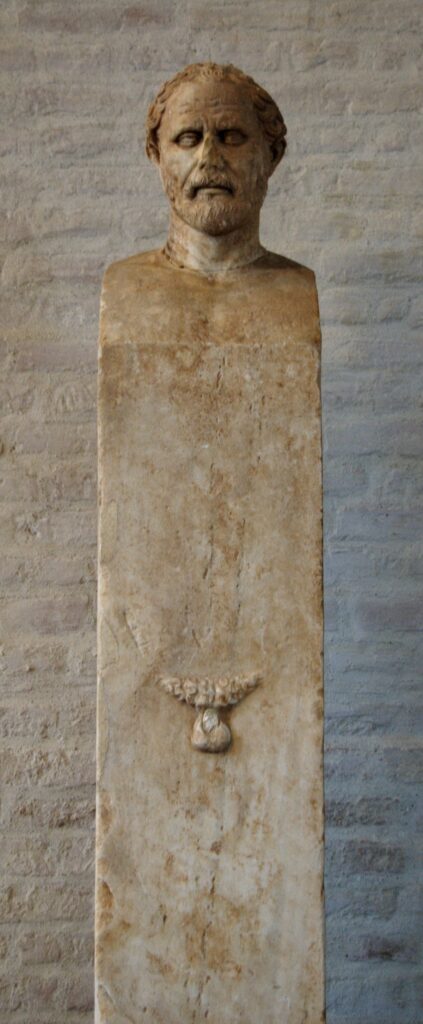
Hermes was the messenger of the gods and the protector of travelers, merchants, roads, boundaries, and crossings. He was also associated with movement between worlds, making him an especially fitting deity for those stepping beyond familiar territory.
Stone pillars known as herms, often carved with the head of Hermes, were placed along roads, at crossroads, near entrances, and at boundaries. They helped mark the landscape while also invoking the god’s protection.
During my own travels by ferry through Greece, I found myself thinking about the long history of movement across those same waters. Ancient travelers would have faced very different conditions, but the emotional landscape was probably familiar: uncertainty, anticipation, vulnerability, and the hope of arriving safely.
💎 Engraved Gemstones
Engraved gemstones were popular throughout Greek and Roman society. These small stones, often called intaglios, were carved with gods, animals, mythological figures, symbols, or inscriptions.
Some were set into rings and used as personal seals. Others were worn as amulets or talismans connected with protection, healing, prosperity, love, courage, or devotion to a particular deity.
Because they were small and portable, engraved gemstones could move easily between regions and generations. A single object might function as jewelry, a practical seal, a religious symbol, and a personal companion all at once.
🏺 Miniature Figurines
Small figurines of gods, goddesses, heroes, and protective spirits were common in homes and shrines throughout the Greek and Roman worlds. While some served as offerings or devotional objects, others acted as reminders of divine protection and household well-being.
Their presence highlights an important theme found throughout history: meaningful objects weren’t confined to temples. They were part of everyday life.
🌊 Travel Through the Ancient Mediterranean
The Greek and Roman Mediterranean was a world in motion. Ships carried pottery, wine, grain, metals, jewelry, people, stories, and sacred symbols from one shore to another. Protective charms traveled with them, gathering new meanings as they crossed languages and cultures.
Today, travelers can see these objects and symbols in places such as the National Archaeological Museum and Acropolis Museum in Athens, the museums at Delphi and Delos, and archaeological collections throughout Greece and Italy. They also survive in temple carvings, mosaics, coins, household artifacts, and the protective eye charms still sold throughout Greece.
Jewish Protective Traditions
Growing up in an interfaith family, Judaism was part of my life long before I studied archaeology or lived in Israel. Spending two years there later gave me the opportunity to experience many of these traditions not simply as historical artifacts, but as living expressions of faith woven into everyday life. Walking through neighborhoods, markets, and archaeological sites, I saw how symbols that have existed for centuries continue to shape daily life today.
Unlike many of the ancient cultures explored in this article, Judaism has traditionally emphasized trust in God over the power of objects themselves. Even so, meaningful symbols, prayers, and sacred texts have long served as reminders of God’s presence, covenant, protection, and the importance of living faithfully. Some are worn or carried, while others are placed in homes or incorporated into daily prayer.
Some of the best-known Jewish symbols and protective traditions include:
✡️ Magen David (Star of David)
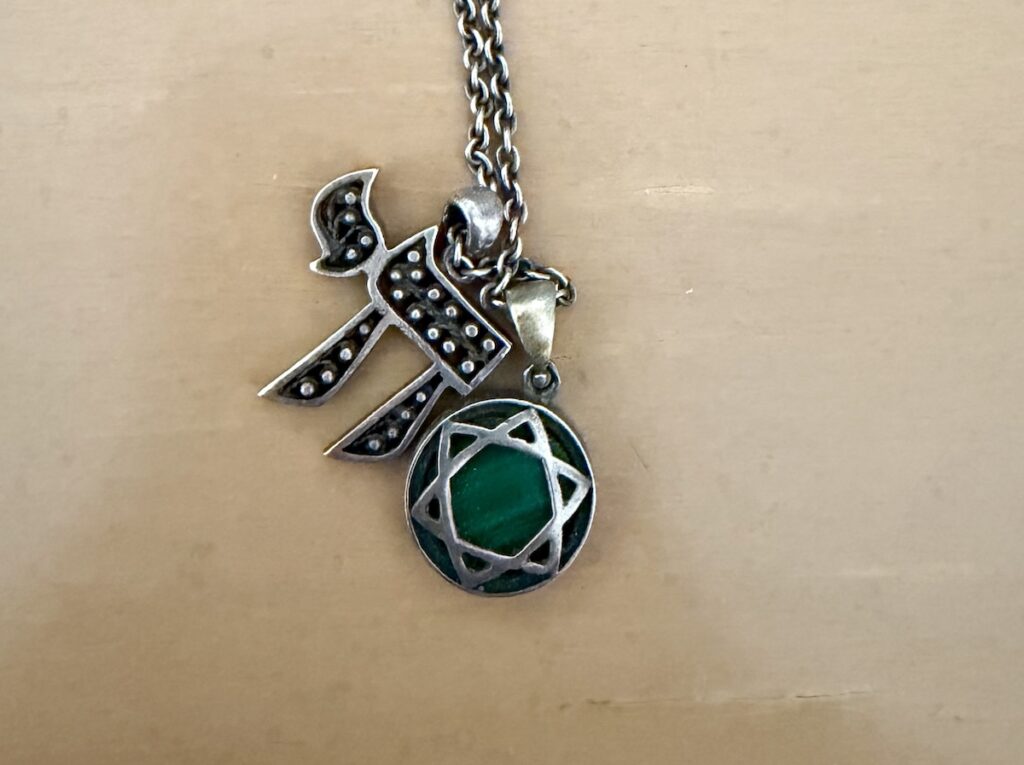
The Magen David, or Star of David, is the most widely recognized symbol of Judaism today. While it was used in various cultures throughout history, it gradually became associated with Jewish communities during the medieval period before eventually becoming a global symbol of Jewish identity.
Today, it is worn on necklaces, displayed in synagogues, appears on the Israeli flag, and serves as a reminder of faith, heritage, and belonging.
חיים Chai
The Hebrew word Chai (חי), meaning “life,” is one of Judaism’s most beloved symbols. Worn as jewelry or displayed in homes, it reflects the Jewish emphasis on cherishing life and living with purpose.
Its significance is also reflected in gematria, the traditional Jewish system of assigning numerical values to Hebrew letters. Because the letters in chai add up to eighteen, gifts are often given in multiples of eighteen as a symbolic blessing for life.
🪬 Hamsa
The Hamsa, an open hand often featuring an eye in its center, is one of the most recognizable symbols throughout the Middle East and North Africa. Although its origins predate Judaism and it has been embraced by several religious traditions, it has become a familiar symbol within many Jewish communities, where it is often associated with God’s protection, blessing, and the protective hand of God.
Today, Hamsas appear on jewelry, artwork, wall hangings, and home décor throughout Israel and around the world.
🚪 Mezuzah
One of the first things many visitors notice in Israel is the mezuzah attached to the doorposts of homes, apartments, hotels, schools, and businesses.
Inside the decorative case is a handwritten parchment containing passages from Deuteronomy, including the Shema, one of Judaism’s central declarations of faith. More than a protective object, the mezuzah serves as a daily reminder of God’s covenant and commandments. At the same time, many Jewish families also view it as a symbol of blessing and protection over the home.
📜 Psalms
Throughout Jewish history, the Book of Psalms has provided comfort during illness, grief, travel, war, and times of uncertainty. Many people continue to recite particular psalms when seeking strength, healing, guidance, or protection.
Unlike an amulet that is worn or carried, the Psalms remind us that words themselves can become companions on life’s journey.
🌍 Where You Can See These Symbols Today
If you visit Israel today, you’ll encounter these traditions throughout everyday life. Mezuzot adorn doorways across the country, Hamsas and Chai necklaces fill the markets of Jerusalem, Safed, and Jaffa, and the Magen David appears everywhere from synagogues to public art to the Israeli flag.
Many of these symbols can also be explored through archaeology and history at places like the Israel Museum, the Bible Lands Museum, the Jewish Quarter of Jerusalem’s Old City, Masada, and numerous archaeological sites throughout the country, where ancient traditions continue to connect the past with the present.
🌍 Visiting Israel?
Explore my detailed guide to the Jewish Quarter of Jerusalem’s Old City on MUKI for walking routes, historic sites, and practical tips.
Christian Protective Traditions
Growing up in an interfaith family also exposed me to Christian traditions, and later my studies in biblical studies, archaeology, and travel throughout Israel and other parts of the Mediterranean gave me a deeper appreciation for how these symbols developed over time. Like Judaism, Christianity has generally emphasized faith in God rather than the power of objects themselves. Even so, symbols, devotional items, and pilgrimage traditions have long helped Christians express their faith, remember sacred stories, and seek comfort during life’s uncertainties.
Throughout history, Christians have carried meaningful objects on pilgrimages, long journeys, and daily life. Some served as reminders of faith, while others became associated with protection, healing, or the prayers of particular saints.
Some of the best-known Christian symbols and devotional objects include:
✝️ The Cross
The cross is Christianity’s central symbol, representing the death and resurrection of Jesus Christ. Worn as jewelry, displayed in homes and churches, or carried during pilgrimage, it serves as a reminder of faith, hope, sacrifice, and redemption.
Over the centuries, crosses have taken many forms, from simple wooden crosses to elaborate jeweled pendants, each reflecting different artistic traditions and cultures.
🧳 St. Christopher Medals
St. Christopher has long been regarded as the patron saint of travelers, although the historical details of his life remain uncertain. According to Christian tradition, he carried a child across a dangerous river, later realizing the child was Christ himself.
Today, many travelers carry St. Christopher medals in their pockets, wallets, vehicles, or luggage as reminders to seek God’s guidance and protection during their journeys.
🌹 The Miraculous Medal
First associated with the visions of Saint Catherine Labouré in nineteenth-century France, the Miraculous Medal became a widely worn devotional object among Catholics.
Many wear it as an expression of faith and a reminder of God’s grace and the intercession of the Virgin Mary.
📿 The Rosary
The rosary combines prayer with a physical string of beads that helps guide meditation on key events in the lives of Jesus and Mary.
Whether prayed at home, in churches, or while traveling, the rosary has become one of Christianity’s most recognizable devotional objects, offering comfort, structure, and reflection during times of joy, sorrow, uncertainty, and gratitude.
🦴 Relics
From the earliest centuries of Christianity, relics associated with saints and martyrs became important objects of devotion. Churches throughout Europe and the Middle East were built to house relics, drawing pilgrims from across the Christian world.
Whether consisting of physical remains or objects associated with a saint, relics connected believers with the lives of those they admired and inspired countless journeys of pilgrimage.
🎖️ Pilgrim Badges
One of my favorite discoveries about medieval pilgrimage came while visiting the Salisbury Museum in England. The museum had an entire display dedicated to pilgrim badges, small metal souvenirs purchased after visiting important shrines throughout medieval Europe.
Far more than simple keepsakes, these badges identified where someone had traveled and often reflected the saint or shrine they had visited. Pilgrims wore them on hats, cloaks, or bags as visible reminders of their journey and, in some cases, as symbols of protection or devotion.
One exhibit explained that pilgrims returning from Canterbury sometimes threw their badges into rivers as a gesture of gratitude for a safe journey home. Archaeologists have since recovered many of these badges from waterways around Salisbury, offering a remarkable glimpse into medieval travel and religious life.
The exhibit also featured badges depicting saints such as Thomas Becket, Our Lady of Salisbury, St. Edith of Wilton, and St. Werburga, each connected to a particular shrine, miracle, or pilgrimage tradition. Nearby were tiny ampullae, miniature containers pilgrims filled with holy water or oil to carry home as tangible reminders of their journey.


As both an archaeologist and traveler, I love objects like these because they blur the line between artifact and souvenir. In many ways, medieval pilgrim badges weren’t so different from the magnets, postcards, or patches we collect today. The difference is that they also carried layers of faith, identity, memory, and, for many pilgrims, a sense of divine protection.
Pilgrimage: Carrying Faith on the Journey
Pilgrimage has always been about more than reaching a destination. For many Christians, the journey itself became an opportunity for prayer, reflection, repentance, and transformation.
Whether walking the Camino de Santiago, traveling to Jerusalem, visiting Rome, or exploring local shrines, pilgrims often carried crosses, rosaries, medals, badges, or other meaningful objects that connected their physical journey with their spiritual one.
🌍 Where You Can See These Symbols Today
Travelers can encounter Christian devotional objects and pilgrimage traditions throughout the world. Some of my favorite places include Jerusalem, where many of Christianity’s holiest sites are located, Rome and Vatican City, Santiago de Compostela in Spain, Canterbury Cathedral in England, and countless churches, monasteries, and cathedrals across Europe and the Middle East.
Even today, many pilgrims continue to wear crosses, pray with rosaries, carry St. Christopher medals, and collect pilgrim stamps or badges as reminders that the journey itself can be just as meaningful as the destination.
Across Asia
Across Asia, amulets, sacred threads, carved stones, prayer containers, and geometric symbols have long been connected with protection, blessing, devotion, identity, and intention. The forms vary widely by culture and religion, but many serve a familiar human purpose: making faith, hope, or protection tangible.
🇯🇵 Japan: Omamori
Omamori are small cloth amulets received at Shinto shrines and Buddhist temples, where they are blessed for a particular purpose, such as safe travel, good health, academic success, or prosperity. Although many visitors receive one for themselves, they are also commonly given as thoughtful gifts to wish someone well. Traditionally, omamori are treated with respect and are returned to a shrine or temple after about a year or once their purpose has been fulfilled.

🇨🇳 China: Jade Amulets (Yupei)
For more than 5,000 years, jade has been one of China’s most treasured materials, valued not only for its beauty but also for its cultural, philosophical, and spiritual significance. Long before it was used primarily as jewelry, jade appeared in ceremonial objects, ritual artifacts, and personal ornaments, often associated with protection, virtue, and longevity.
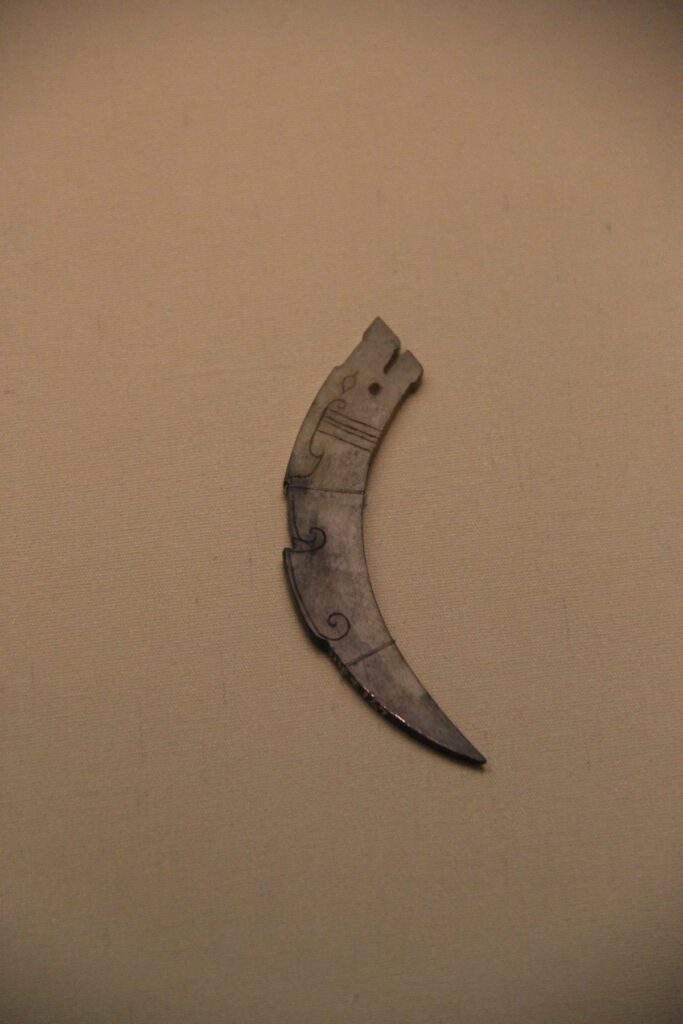
One of the best-known forms is the yupei (玉佩), a traditional jade pendant or amulet. Historically worn by nobles and scholars, yupei symbolized moral character, social status, and harmony between the wearer and the natural world. Confucius praised jade as embodying the virtues of wisdom, sincerity, benevolence, and courage, making it much more than a decorative stone.
The meaning of a yupei often depends on its carved design. Some of the most common include:
- 🐉 Dragon: Strength, wisdom, prosperity, and imperial authority.
- 🌸 Lotus: Purity, spiritual growth, and enlightenment.
- 🔒 Peace Buckle (Ping An Kou): Safety, protection, and a smooth journey through life.
- 🍶 Hulu (Gourd): Health, longevity, and well-being.
- 🙏 Guanyin: Compassion, mercy, and spiritual guidance.
Like many of the traditions explored throughout this article, jade amulets remind us that meaningful objects often reflect the values a culture hopes to cultivate. Whether representing virtue, health, prosperity, or inner harmony, these pendants have remained cherished companions for thousands of years.
🏔️ Tibet: Prayer Boxes & Protection Cords
Throughout Tibet and the Himalayan region, devotional objects often accompany everyday life. Prayer boxes (gau) are small wearable containers that may hold sacred texts, relics, or blessed objects, while colorful protection cords are commonly tied around the wrist or neck after receiving a blessing from a monk or teacher.
Rather than being valued for the object itself, these items often serve as reminders of one’s spiritual practice, faith, and connection to a particular community or pilgrimage.
🇮🇳 India: Sacred Threads & Yantras
Across India, sacred symbols appear in countless forms. Sacred threads, such as the kalava or raksha sutra, are tied around the wrist during religious ceremonies as reminders of blessings, prayers, or commitments.
Another longstanding tradition is the yantra, a sacred geometric design used in Hindu and Buddhist traditions for meditation, contemplation, and worship. Rather than functioning simply as decoration, yantras are intended to focus attention, support spiritual practice, and symbolize deeper philosophical ideas.
🌍 Where You Can See These Symbols Today
Travelers can encounter these traditions at Shinto shrines and Buddhist temples in Japan, jade museums and historic markets in China, Tibetan Buddhist monasteries across the Himalayan region, and Hindu and Buddhist temples throughout India. Many sacred sites still distribute or sell devotional objects, while museums preserve older examples and explain how their meanings changed over time.
Indigenous Traditions
Across the world, Indigenous cultures have long created meaningful objects connected to identity, ancestry, ceremony, protection, healing, and relationships with the natural world. While the traditions of First Nations, Native American, Inuit, Aboriginal Australian, Māori, and countless other Indigenous peoples are incredibly diverse, many share a deep understanding that objects can carry stories, responsibilities, and connections to both community and place.
Rather than existing as isolated symbols, many of these objects are woven into ceremonies, oral traditions, family histories, and cultural practices that continue today.
Some examples include:
🧺 Medicine Bundles
Many Indigenous nations throughout North America have traditions involving medicine bundles, carefully assembled collections of sacred objects that may include herbs, stones, animal materials, pipes, or other items of personal or ceremonial significance.
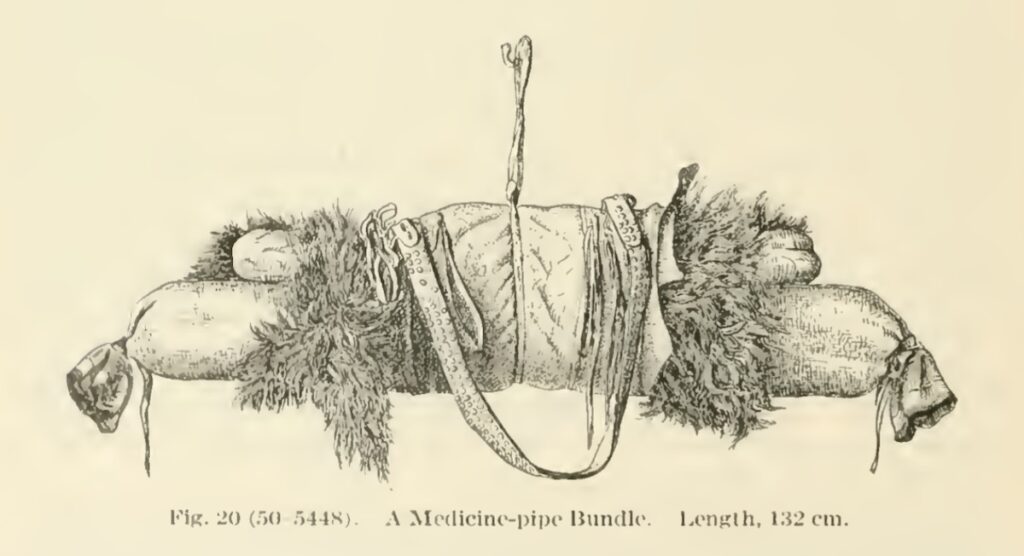
Their purpose, appearance, and meaning vary greatly between nations, and many are considered deeply sacred and private. Rather than functioning as simple charms, medicine bundles often represent relationships with ancestors, spiritual teachings, and community responsibilities.
🪶 Feathers
Feathers hold profound significance in many Indigenous cultures, often representing honor, courage, gratitude, prayer, or a connection with the Creator. Eagle feathers, in particular, are held with great respect by many Native nations and are traditionally earned rather than simply given or purchased.
The meaning and protocols surrounding feathers differ among Indigenous communities, reflecting the diversity of their cultural traditions.
🪵 Carved Objects
From Northwest Coast transformation masks and totem poles to carved figures, pendants, and ceremonial objects found throughout Indigenous cultures worldwide, carving has long been a way of preserving stories, honoring ancestors, and expressing cultural identity.
These works are far more than decorative art. They often embody histories, teachings, family lineages, or spiritual beliefs passed down across generations.
🐚 Shells and Natural Materials
Shells, stones, seeds, bone, and other natural materials have been incorporated into meaningful objects by Indigenous cultures around the world. Their significance varies widely between communities, but they often reflect relationships with the natural world, ancestors, ceremony, identity, and place.
One fascinating example comes from the Hopewell Interaction Sphere of eastern North America (c. 100 BCE to 400 CE). Archaeologists have discovered lightning whelk shells from the Gulf of Mexico in ceremonial earthworks hundreds of miles away in present-day Ohio. These shells may have reached the region through long-distance travel, exchanges between communities, pilgrimages, or gifting, demonstrating how meaningful objects could move across vast landscapes.
Rather than serving as ordinary decorations, they were transformed into cups, beads, pendants, and carved gorgets used in ceremonial contexts. For many Indigenous traditions, shells have been associated with creation, renewal, and the cycles of life, although their meanings differ among communities.
🌍 Where You Can See These Symbols Today
Travelers interested in learning more should seek opportunities to engage with Indigenous-led museums, cultural centers, heritage sites, and guided experiences, where these traditions are presented by the communities who continue to practice them.
Across North America, Australia, New Zealand, and many other parts of the world, Indigenous artists, knowledge keepers, and cultural organizations share histories, traditional arts, and contemporary perspectives that highlight the richness and diversity of their cultures. Whenever possible, purchasing artwork directly from Indigenous artists and supporting Indigenous-owned businesses helps ensure these traditions continue to thrive.
🌍 Symbols That Connect Cultures
As I’ve studied archaeology, traveled, and explored the stories behind these traditions, one theme continues to stand out: although cultures developed their own unique beliefs and artistic styles, many returned to remarkably similar symbols.

Some of these images spread through trade, migration, conquest, pilgrimage, and cultural exchange. Others may have emerged independently as different societies wrestled with the same universal questions about life, death, protection, transformation, and humanity’s relationship with the natural and spiritual worlds.
Rather than belonging to a single religion or civilization, these recurring symbols appear across continents and centuries, taking on new meanings while still echoing something deeply familiar. Their continued presence reminds us that symbols are living traditions. They evolve, travel, and invite each generation to discover new layers of meaning.
Some of the most enduring symbols found across cultures include:
- 🌀 Spiral: Growth, cycles, transformation, and the unfolding journey of life.
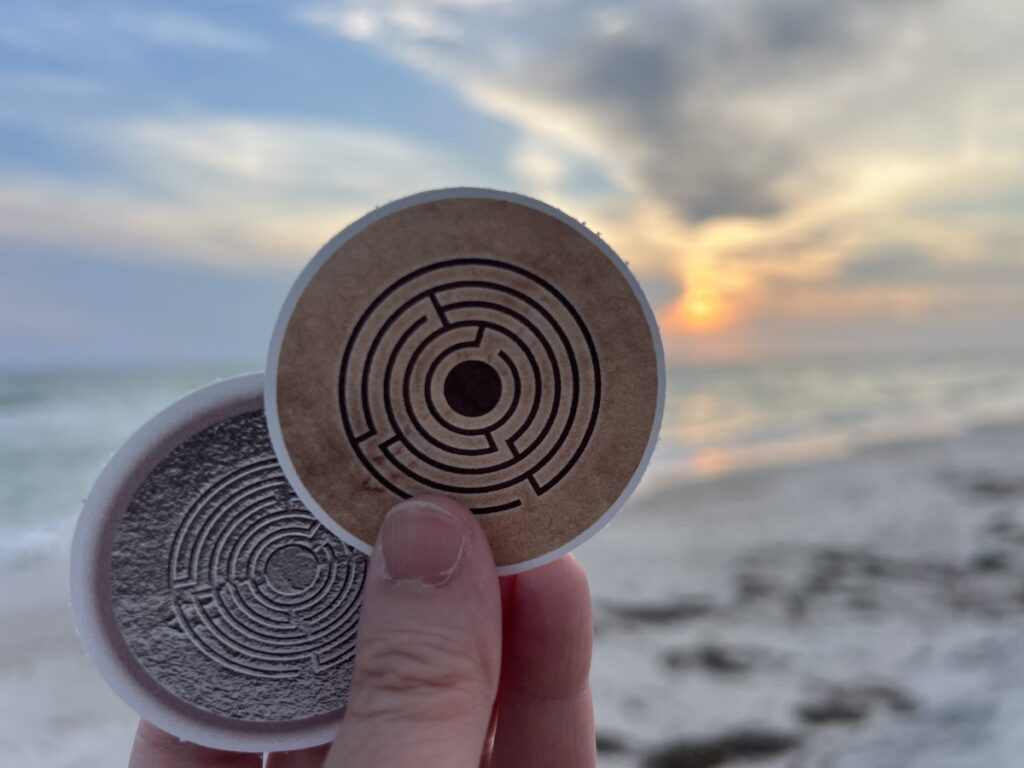
- 🧩 Labyrinth: Pilgrimage, reflection, and the path inward before returning outward.
- 🦋 Butterfly: Change, renewal, resilience, and personal transformation.
- 🪲 Scarab: Rebirth, perseverance, and the daily return of light.
- 👁️ Eye: Protection, awareness, healing, and watchfulness.
- ☀️ Sun: Life, vitality, divine power, and renewal.
- 🌙 Moon: Cycles, intuition, time, and transformation.
- 🐍 Serpent: Healing, wisdom, renewal, fertility, and the continual cycle of life.
- ♾️ Knots: Connection, continuity, eternity, and the bonds that tie people together.
- 🌳 Tree of Life: Growth, wisdom, interconnectedness, and the relationship between heaven, earth, and the underworld.

Each of these symbols deserves a deeper exploration of its own. Throughout The Mindful Wellness Traveler, you’ll find guides that trace their histories, explore their meanings across cultures, and highlight where you can encounter them while traveling today.
Modern Amulets
Although the word amulet may evoke images of ancient Egypt or medieval pilgrims, many of us still carry meaningful objects today. We may not think of them as amulets, but they often serve a similar purpose: reminding us who we are, where we’ve been, what we value, or the people we love.

Some modern examples include:
- 💍 Wedding rings, symbolizing commitment and lifelong partnership.
- ✝️ Crosses, worn as expressions of Christian faith.
- ✡️ Star of David necklaces, representing Jewish identity and heritage.
- 🪬 Hamsas and evil eye bracelets, carried by many as symbols of blessing or protection.
- 🪖 Military dog tags, honoring service, identity, and sacrifice.
- ❤️ Memorial jewelry, keeping the memory of loved ones close.
- 🖋️ Tattoos, marking meaningful experiences, beliefs, milestones, or personal transformation.
- 🤝 Friendship bracelets, representing connection and shared experiences.
- 📿 Lockets or pendants holding photographs or small mementos.
- 🪨 Stones, shells, or keepsakes collected while traveling as reminders of meaningful places and experiences.
Whether deeply religious, culturally significant, or simply personal, these objects often become anchors for memory, identity, and intention. Their meaning comes not only from the object itself but from the stories we attach to it.
Choose a Meaningful Travel Companion
One of the joys of travel is discovering objects that continue to tell a story long after the journey ends.
Rather than thinking about an amulet as something magical, consider choosing an object that serves as a meaningful reminder of your journey, values, or intentions. Sometimes the simplest keepsakes become the most treasured because of what they represent.
As you travel, ask yourself:
- What reminds me to stay present?
- What symbolizes courage or resilience?
- What helps me remember who I am?
- What place changed the way I see the world?
Your travel companion doesn’t have to be ancient or expensive. It might be:
- 🪨 A smooth stone collected during a meaningful hike.
- 🐚 A shell from a favorite beach.
- 🧭 A tiny compass representing curiosity and adventure.
- 📿 A meaningful pendant or necklace.
- 🧵 A handmade bracelet from a local artisan.
- 📸 A small keepsake that reminds you of a life-changing journey.
- 🎒 A sticker, patch, keychain, or charm featuring a symbol that continues to inspire you.
One of the reasons I created the Mindful Wellness Traveler Shop was to give travelers another way to carry these timeless symbols into everyday life. Whether it’s a sticker on your water bottle, a patch on your backpack, a keychain that travels with you, or a charm that reminds you of your journey, these small objects can become daily reminders of the places you’ve explored and the person you’re becoming.
In my shop, you’ll find stickers, patches, keychains, charms, and other travel-inspired keepsakes featuring symbols like the labyrinth, butterfly, scarab, and wave, each representing a different stage of the journey explored throughout this site.
✈️ Why We Still Carry Symbols Today
For thousands of years, people have tucked meaningful objects into their pockets, sewn them into clothing, hung them from doorways, worn them around their necks or wrists, or carried them across mountains and oceans.
Ancient merchants crossed deserts with carved amulets. Sailors navigated the Mediterranean with protective symbols. Pilgrims collected badges and shells to remember sacred journeys. Parents tied sacred threads around a child’s wrist. Travelers carried prayers, relics, and treasured keepsakes.
Today, our symbols may look different. A lucky coin, a family heirloom, a cross, a Hamsa, a jade pendant, a friendship bracelet, or simply a stone collected along the way can hold just as much meaning.
Whether viewed as sacred objects, cultural traditions, reminders of loved ones, or personal symbols of intention, these small companions tell a remarkably human story. Across cultures and centuries, people have sought ways to carry hope, identity, courage, and connection wherever life leads.
Perhaps that’s why sacred symbols continue to fascinate us. Whether carved into ancient temples, uncovered during archaeological excavations, worn around your neck, displayed in your home, or tucked into a backpack before a journey, they remind us not only where we’ve been, but also what we value and who we’re becoming.
🧭 Ready to go deeper?
The Power of Four is a $7 e-book that weaves together ancient wisdom, symbolism, and modern healing through the lens of the elements.
It’s a soulful, self-paced read with journaling prompts, symbolic stories, and travel-inspired insights to walk your path with more clarity.

💬 Want to keep the conversation going?
Join other solo travelers in the Facebook group » to share thoughts, stories, and questions.